


Shadows On The Grass
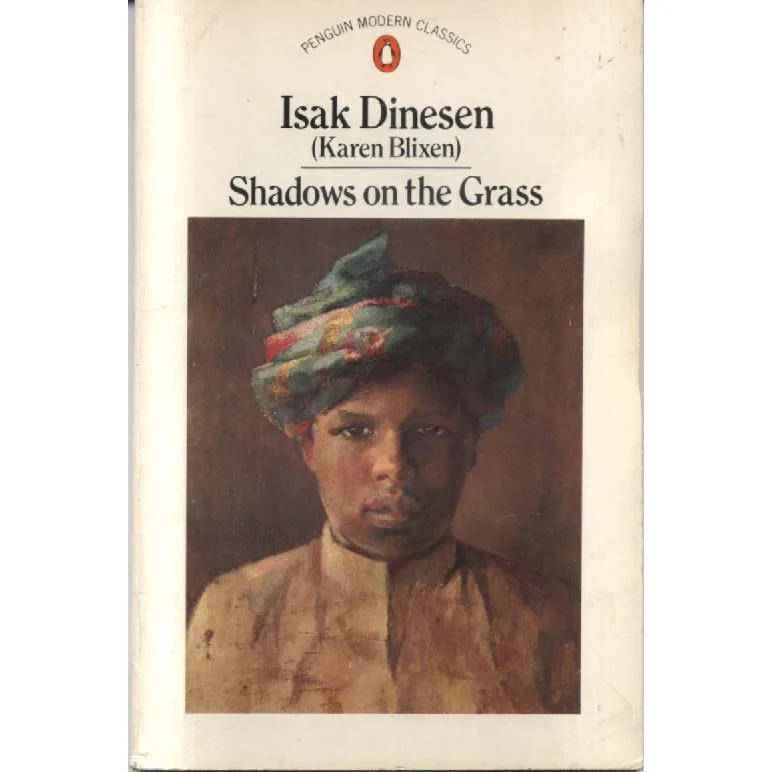
Publisher: Penguin Books
Format: Paperback
ISBN: 0140066314
There are memoirs that arrive with the solemn tread of history, and then there are books like Shadows on the Grass, which seem to drift in on a warmer, stranger breeze—elegant, reflective, faintly melancholic, and entirely aware that memory is never quite the same thing as fact lined up in sensible rows. Written by Isak Dinesen, the pen name of Karen Blixen, this 1984 Penguin edition offers a return to the world of colonial East Africa first made famous in Out of Africa, though here the tone is perhaps even more intimate, more haunted, and more conscious of time’s habit of turning people into presences half remembered and half imagined.
Dinesen was never a writer inclined to plainness when atmosphere was available, and Shadows on the Grass is full of exactly the sort of beautifully composed recollection one hopes for from her. This is not a brisk, practical account of daily life on a farm. Nobody comes to Isak Dinesen for bullet points. Instead, one gets a literary afterglow: portraits, impressions, remembered voices, and those lingering emotional arrangements by which a vanished life continues to cast its outline across the present. The title alone tells you what sort of territory this is. Not the grass itself, you understand, but the shadows upon it. Not life as it was, but life as it falls back across the mind.
Of course, there is something gloriously unfashionable—and therefore rather wonderful—about a book like this. It belongs to that older literary world in which style mattered enormously, recollection was allowed to shimmer, and the relationship between writer and subject was permitted all the complexity, ambiguity and unease that modern readers may find themselves simultaneously admiring and interrogating. One does not read Dinesen for tidy moral positioning or neat documentary balance. One reads her for voice, for atmosphere, for the peculiar grandeur with which she can invest memory, and for the almost aristocratic confidence that if she is going to remember, she will do so beautifully.
What makes Shadows on the Grass especially compelling is that it returns not simply to a place but to the people who inhabited it. This is where memoir becomes almost a gallery of human presence: figures recalled not as historical data but as living characters whose influence persisted long after the original world had passed. Dinesen had that rare gift of making individuals appear both vividly themselves and slightly mythical, as though everyone she encountered had stepped, to some degree, into legend simply by crossing the threshold of her prose. Whether this is flattering, selective, or a little dangerous is part of the fascination.
There is, too, a quiet irony in the enterprise. Colonial memoirs often present themselves as solid records of a lost world, but the best of them reveal something more unstable: that what has been lost cannot be cleanly recovered, only revisited through feeling, language and the peculiar distortions of remembrance. Shadows on the Grass knows this, or seems to. It is not trying to reassemble life exactly as it was. It is tracing what remains—echoes, attachments, unresolved emotions, the sense of a landscape and a set of relationships still flickering somewhere beyond direct reach. In that sense it is less a sequel than a coda, and a rather moving one.
As a good copy sold by Crappy Old Books, this edition has exactly the right air of used dignity. A memoir like this should not be too glossy and untouched; one wants at least the suggestion that it has spent some time in the company of thoughtful readers, perhaps on bedside tables or shelves where serious paperbacks gather and wait to be rediscovered. Good is ideal here: respectable, readable, and quietly seasoned, like a book that has already done a little reflective work in the world and is entirely prepared to do some more.
Being a Penguin edition only adds to the appeal. Penguin had, and has, that marvellous knack of making literary seriousness feel both accessible and faintly cosmopolitan. A Dinesen paperback from the 1980s suggests a reader of taste, someone inclined to memoir, Africa, atmosphere, and perhaps a little civilised melancholy. It looks right on a shelf. It looks even righter opened in the hand, where its pages can begin the old work of carrying the reader elsewhere—not with noise or spectacle, but with cadence, image, and long shadows.
In the end, Shadows on the Grass is the sort of book that asks to be read in a slower frame of mind. It offers memory rather than plot, presence rather than incident, and prose that lingers deliberately over a world already slipping into distance. Elegant, wistful, slightly mannered in all the best ways, and rich with the peculiar afterlife of remembered people and places, it is a deeply atmospheric work from a writer who knew that the past is rarely gone so much as waiting for the right light to reveal it. A handsome, thoughtful copy for anyone who prefers their memoirs less as records and more as beautifully cast shadows.
Keep browsing: See more Modern Classics books Other books by Isak Dinesen
